
Cricut Projects for Beginners: First 5 Projects to Try
 27 min read
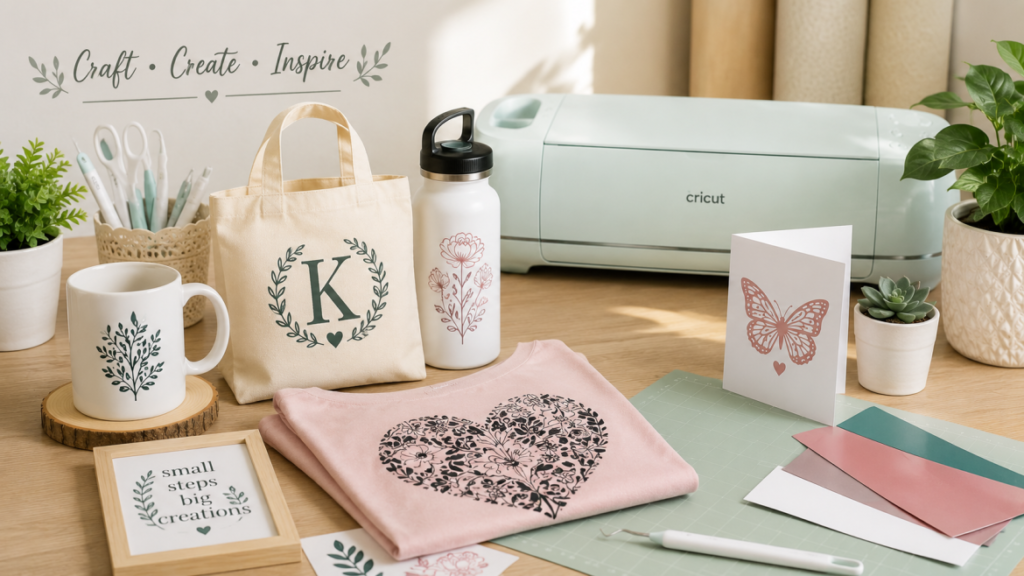
You just unboxed your brand-new Cricut machine. It’s sitting on your craft table, looking sleek and full of potential — and maybe a little intimidating. You’ve watched the setup videos, installed Design Space, and now you’re asking yourself: “What should I actually make first?”
Here’s the truth: your first Cricut project doesn’t need to be a masterpiece. It needs to be achievable, forgiving, and confidence-building. The best Cricut projects for beginners teach you the basics without overwhelming you with complicated techniques, expensive materials, or designs that require precision you haven’t developed yet.
This guide walks you through the 5 absolute best Cricut projects for beginners — ranked from easiest to slightly more challenging. Each project is designed to teach you a specific skill, uses affordable materials you can find at any craft store, and produces something you’ll actually want to keep or give as a gift. You’ll learn how to cut vinyl, work with different materials, use Design Space effectively, and avoid the common mistakes that frustrate new Cricut users.
Whether you have a Cricut Maker, Explore, or Joy, these projects work on all models. Let’s get cutting and turn your new machine from an intimidating box into your favorite creative tool.
📋 Table of Contents
- Why These 5 Projects Are Perfect for Beginners
- What You Need Before Starting Your First Project
- Project 1: Vinyl Decal for Your Water Bottle or Laptop
- Project 2: Personalized Greeting Card
- Project 3: Iron-On T-Shirt or Tote Bag
- Project 4: Custom Labels and Stickers
- Project 5: Simple Home Decor Sign
- What to Try After Your First 5 Projects
- Common Beginner Mistakes and How to Avoid Them
- Where to Find Beginner-Friendly SVG Designs
- Frequently Asked Questions
Why These 5 Cricut Projects for Beginners Are Perfect
Not all “beginner projects” are actually beginner-friendly. Some tutorials assume you already understand Cricut terminology, have a stash of materials on hand, or can troubleshoot problems on the fly. These Cricut projects for beginners are different — here’s why they’re specifically chosen for absolute beginners:
✅ What Makes These Projects Beginner-Perfect:
- Forgiving materials: You’ll use vinyl and cardstock that are easy to work with and won’t destroy your budget if you make mistakes
- Simple designs: No intricate cuts with tiny details that frustrate beginners and dull blades
- Quick completion: Each project takes 15-45 minutes, perfect for maintaining focus and seeing results fast
- Core skill building: Every project teaches you a fundamental Cricut technique you’ll use forever
- Low material cost: Total investment for all 5 projects: under $30
- Instant gratification: You’ll make things you can actually use or gift immediately
- Mistake tolerance: Even if your first attempt isn’t perfect, it’ll still work and look good
Skills You’ll Master Through These 5 Projects
By completing all five projects in order, you’ll learn:
- How to load and unload cutting mats properly
- Basic Design Space navigation and project setup
- Cutting adhesive vinyl and the weeding process
- Scoring and folding cardstock accurately
- Applying heat transfer vinyl (iron-on) to fabric
- Working with different blade depths and pressure settings
- Transfer tape application and avoiding bubbles
- Understanding which materials work on which Cricut models
What You Need Before Starting Your First Project
Before diving into your first project, make sure you have these essential supplies and software setup complete.
Essential Supplies for All 5 Projects
🛒 Shopping List (One-Time Purchase):
📦 Project-Specific Materials:
Software Setup Checklist
✅ Before Your First Cut:
- Cricut Design Space installed and account created (free)
- Machine connected to computer or mobile device via Bluetooth or USB
- Machine firmware updated (Design Space will prompt you)
- Test cut completed using the cardstock that came with your machine
- You understand how to upload SVG files to Design Space
- You know where the “Make It” button is and what happens when you click it
🎯 Project 1: Vinyl Decal for Your Water Bottle or Laptop
Easiest ⏱️ 15-20 minutes 💰 $5-7
Why start here: Vinyl decals are the most forgiving first project. Adhesive vinyl is easy to cut, mistakes are cheap to fix, and the weeding process teaches you patience and precision without major consequences if you mess up. Plus, you’ll end up with a custom decal for something you use every day.
What You’ll Learn:
- Loading material onto your cutting mat correctly
- Using the “Make It” function in Design Space
- Weeding vinyl (removing excess material)
- Applying transfer tape
- Transferring vinyl to a curved or flat surface
- Proper pressure settings for vinyl
Materials Needed:
- One sheet of permanent adhesive vinyl (12×12″ or smaller)
- StandardGrip cutting mat
- Weeding tool
- Transfer tape (6-inch wide strip)
- Scraper or old credit card
- Clean water bottle, laptop, phone case, or similar smooth surface
- Rubbing alcohol and paper towel (to clean surface before applying)
Step-by-Step Instructions:
- Choose your design. Pick a simple name, monogram, or small icon — nothing with tiny details or intricate script fonts. Size it to 3-4 inches wide in Design Space. Great beginner options: your name in a bold sans-serif font, a simple heart or star shape, or “But First Coffee” in block letters.
- Prepare your vinyl. Place your vinyl sheet SHINY SIDE DOWN (color facing down) on your cutting mat. The shiny side is the carrier sheet that holds your design while cutting. Smooth it down firmly with your hand or brayer to ensure no bubbles or lifted corners.
- Load and cut. Set your material dial to “Vinyl” or select “Premium Vinyl” in Design Space. Load your mat into the machine (gray guides on both sides). Press the flashing “Go” button. Watch your first cut happen — it’s magical!
- Unload and weed. Press the unload button and remove your mat. Your design is cut! Now use your weeding tool to remove everything that’s NOT your design. Start from the outside and work inward. Use the tip of the tool to grab a corner of the excess vinyl and peel it away. The letters or shapes you want should stay on the carrier sheet.
- Apply transfer tape. Cut a piece of transfer tape slightly larger than your design. Peel off the backing and place the sticky side down over your weeded design. Use your scraper to firmly press the transfer tape onto the vinyl, working from center outward to eliminate bubbles.
- Transfer to surface. Slowly peel the transfer tape up from the carrier sheet — your vinyl design should come with it. If parts stick to the carrier sheet, press down again with the scraper. Clean your water bottle or laptop with rubbing alcohol and let dry. Position your design where you want it, then press firmly and scrape from the center outward. Slowly peel away the transfer tape at a 45-degree angle, leaving your vinyl decal perfectly applied!
💌 Project 2: Personalized Greeting Card
Easy ⏱️ 20-25 minutes 💰 $3-5
Why this is second: Greeting cards introduce you to scoring (making fold lines), working with cardstock, and creating multi-layer designs without the complexity of vinyl weeding. You’ll learn Design Space’s scoring features and produce something gift-worthy on your second project.
What You’ll Learn:
- How scoring works and why it matters
- Setting up a card template in Design Space
- Working with different cardstock weights
- Layering different colored papers
- Attaching embellishments
- Creating professional fold lines
Materials Needed:
- 2-3 sheets of cardstock in coordinating colors (65-80 lb weight)
- StandardGrip cutting mat
- Scoring stylus or wheel (comes with most Cricut machines)
- Glue stick or double-sided tape
- Bone folder or ruler (for crisp folds)
- Optional: Small vinyl lettering or Design Space text for the front
Step-by-Step Instructions:
- Design your card. In Design Space, create a rectangle 10″ wide by 7″ tall. Add a vertical score line at the 5″ mark (this creates the fold). Add decorative elements like hearts, flowers, or a simple frame on the front half. Keep designs at least 0.5″ from all edges. Add “Happy Birthday” or your message using a simple font.
- Set up for scoring. Install your scoring tool in Clamp A (or the left clamp on your machine). Make sure Design Space shows score lines in dashed lines and cut lines in solid lines. Select your material as “Medium Cardstock” or “Cardstock for Intricate Cuts” depending on your paper weight.
- Load and cut/score. Place your cardstock on the mat. The machine will score first, then cut. You’ll hear different sounds — scoring is quieter and faster than cutting. Don’t worry if it looks like nothing’s happening during scoring — check closely and you’ll see the indent line.
- Fold your card. Remove your cut card from the mat. Use your bone folder or the edge of a ruler to reinforce the score line, then fold along it. The scored side should be on the INSIDE of the fold for the cleanest look. Crease firmly.
- Add layers and decoration. Cut smaller rectangles, circles, or decorative shapes from contrasting cardstock. Layer these on your card front using a glue stick or foam adhesive dots for dimension. Add your message or name using small vinyl letters or hand-write it.
- Finish the interior. Cut a smaller rectangle from white or cream cardstock for the inside message area. Glue it on the right interior panel. Write your personalized message, and your first handmade card is complete!
👕 Project 3: Iron-On T-Shirt or Tote Bag
Easy-Medium ⏱️ 30-40 minutes 💰 $8-12
Why this is third: Iron-on vinyl (also called heat transfer vinyl or HTV) is slightly trickier than adhesive vinyl because you have to mirror your design and use heat to apply it. But once you master this, you can create custom clothing, tote bags, and fabric projects that look professionally made.
What You’ll Learn:
- Working with iron-on vinyl and how it differs from adhesive vinyl
- Mirroring designs (critical for HTV!)
- Weeding iron-on material
- Using heat to apply vinyl to fabric
- Proper temperature and pressure settings
- When to do hot peel vs. cold peel
Materials Needed:
- One sheet of iron-on vinyl (12×12″ or smaller)
- Plain cotton t-shirt or canvas tote bag (light colored works best for beginners)
- StandardGrip cutting mat
- Weeding tool
- Household iron or Cricut EasyPress
- Parchment paper or Teflon sheet
- Hard, flat surface (ironing board or covered countertop)
- Towel or pressing pillow (to place inside shirt)
Step-by-Step Instructions:
- Choose and mirror your design. Pick a simple phrase or icon — think “Mama Bear,” a coffee cup outline, or “Beach Please” in a chunky font. Size it to 8-10 inches wide. In Design Space, click the “Mirror” toggle in the bottom panel BEFORE cutting. This is crucial — iron-on cuts backward so it reads correctly when transferred!
- Prepare iron-on vinyl. Place your HTV SHINY SIDE DOWN on the cutting mat (same as adhesive vinyl). The shiny side is the carrier sheet. Set your material to “Iron-On” or “Everyday Iron-On” in Design Space. Note: Iron-on typically requires more pressure than adhesive vinyl.
- Cut and weed. Load your mat and cut. After cutting, weed away the NEGATIVE space (everything that’s not your design). Iron-on weeds opposite to how you might expect — you’ll pull away the outer material and leave your design on the shiny carrier sheet.
- Prepare your fabric. Pre-heat your iron to the highest cotton setting (no steam!). Place a towel or pillow inside your shirt so you’re only ironing the front layer. Smooth out any wrinkles by pressing the area where your design will go. Let it cool for 30 seconds.
- Position your design. Place your weeded design carrier-sheet-side-UP on your shirt or bag exactly where you want it. The vinyl design is underneath against the fabric — remember, you mirrored it, so it’s backward on the carrier sheet but will be correct when you peel.
- Apply heat. Cover your design with parchment paper. Press your iron firmly on top with medium-to-heavy pressure for 30-40 seconds (for EasyPress: 315°F for 30 seconds). Don’t slide the iron around — just press down firmly. Let it cool for a few seconds, then gently peel away the carrier sheet. If any parts of your design lift up, press again with more heat.
🏷️ Project 4: Custom Labels and Stickers
Easy ⏱️ 25-35 minutes 💰 $6-8
Why this is fourth: By now you’re comfortable with cutting and weeding vinyl. Labels and stickers let you practice precision cutting, working with smaller designs, and creating multiple items in one session. This project also introduces kiss-cutting (cutting through vinyl but not the backing), which is incredibly useful.
What You’ll Learn:
- Creating multiple designs on one mat
- Working with smaller, detailed cuts
- Print-then-cut basics (optional advanced technique)
- Making functional, practical items
- Organizing projects efficiently in Design Space
- Batch cutting for productivity
Materials Needed:
- White or colored adhesive vinyl (glossy looks most professional for labels)
- Alternatively: Printable sticker paper or vinyl (if you want to do print-then-cut)
- StandardGrip cutting mat
- Weeding tool
- Transfer tape (if making transfer-style labels)
- Containers, jars, or storage bins to label
Step-by-Step Instructions:
- Plan your labels. Think about what you want to label: pantry jars (flour, sugar, rice), craft storage bins (vinyl scraps, tools, paper), kids’ belongings, or kitchen containers. Make a list of 5-10 labels you’ll actually use. Keep text simple and readable — sans-serif fonts work best for small labels.
- Design in batches. In Design Space, create text boxes for each label. Size them appropriately — most labels work well at 2-3 inches wide. You can fit multiple labels on one 12×12″ sheet. Leave at least 0.5″ between each design for easy weeding. Use the same font for all labels for a cohesive look.
- Optional: Add shapes or borders. Make your labels fancier by adding a circle, rectangle, or decorative frame around each text element. Use the “Slice” or “Weld” features to integrate text and shapes. Simple is better — you’ll thank yourself during weeding!
- Cut all labels at once. Load your vinyl and cut all your labels in one session. This is more efficient than cutting one at a time. Make sure your material setting is correct — labels need clean cuts, so test one first if you’re unsure.
- Weed carefully. Small text can be finicky to weed. Use the tip of your weeding tool and work slowly. If you accidentally pull out a letter, don’t panic — just position it back in place when applying transfer tape.
- Apply to containers. For each label, cut transfer tape to size, apply to your weeded design, scrape firmly, and peel up. Clean your container with rubbing alcohol. Apply the label, scrape from center out, and peel away the transfer tape. Your pantry/craft room/kitchen just got a major upgrade!
🎨 Label Design Ideas for Beginners:
- Pantry labels: Flour, Sugar, Coffee, Tea, Rice, Pasta, Baking Soda, Brown Sugar
- Craft storage: Vinyl Scraps, Transfer Tape, Cardstock, Ribbons, Stickers, Washi Tape
- Kids’ items: Lunchbox, Water Bottle, School Supplies, [Child’s Name] Toys
- Bathroom: Cotton Balls, Q-Tips, First Aid, Medicine, Vitamins
- Office: Pens, Paper Clips, Sticky Notes, Stamps, Envelopes
🏡 Project 5: Simple Home Decor Sign
Medium ⏱️ 40-60 minutes 💰 $10-15
Why this is fifth: This is your first “impressive” project that combines multiple skills: layering vinyl, working with a non-paper/fabric surface, precise alignment, and creating something that looks professionally made. Home decor signs are also highly giftable and can be displayed proudly in your home.
What You’ll Learn:
- Layering multiple colors of vinyl
- Aligning elements precisely
- Working with wood or rigid surfaces
- Creating professional-looking home decor
- Combining text and decorative elements
- Scaling designs to fit specific surfaces
Materials Needed:
- Wood sign blank (8×10″ or 12×12″ from craft store) or painted wood board
- 2-3 colors of permanent adhesive vinyl
- StandardGrip cutting mat
- Weeding tool
- Transfer tape
- Scraper or credit card
- Ruler or measuring tape
- Painter’s tape (for alignment guides)
- Optional: Sandpaper, paint, and sealer if using raw wood
Step-by-Step Instructions:
- Prepare your wood surface. If using a raw wood blank, lightly sand it smooth and wipe away dust. You can paint it (white, black, or a color) or leave it natural wood. Let paint dry completely (2-4 hours). Optional: apply one coat of clear sealer for durability. This step is important — vinyl sticks best to smooth, clean surfaces.
- Choose and size your design. Pick a simple phrase: “Home Sweet Home,” “Gather,” “But First Coffee,” “Welcome,” or “Blessed.” Add a small decorative element like a heart, arrow, or flourish. Size your design to fit your sign with at least 1″ margins on all sides. For an 8×10″ sign, your design should be no larger than 6×8″.
- Plan your layers. If using multiple colors, decide what cuts in which color. For example: main text in black, decorative element in gold, small accent text in another color. In Design Space, separate each color into its own layer by changing colors. This tells the machine to stop between colors so you can swap vinyl.
- Cut all vinyl pieces. Cut each color separately. Weed each piece before moving on. Keep your weeded designs organized by color on their carrier sheets. Don’t apply them yet!
- Measure and mark your sign. Find the center of your sign by measuring and marking lightly with pencil. Use painter’s tape to create a center guideline. This helps you align your vinyl perfectly. Nothing looks worse than a crooked sign!
- Apply vinyl in order. Start with your largest element (usually main text). Apply transfer tape, position it on your sign using your center guideline, scrape firmly, and peel away transfer tape. Then add your second layer (decorative elements), aligning carefully with the first. Continue until all layers are applied. Remove any painter’s tape guides.
- Final touches. Scrape over the entire design one more time to ensure all edges are sealed. Check for any bubbles — push them out toward the nearest edge with your scraper. Wipe the sign clean with a dry cloth. Your first home decor piece is complete!
🎨 Need Perfect Designs for Your First Projects?
Skip the design struggle and start with professionally made SVG files designed specifically for beginners. Every design from PickSVG comes with multiple file formats, clean cuts, and simple instructions.
Browse Beginner-Friendly Designs →What to Try After Your First 5 Projects
Congratulations! You’ve completed your first five Cricut projects and built a solid foundation of skills. You know how to cut vinyl, work with cardstock, apply iron-on to fabric, and create layered designs. So what’s next?
Next-Level Projects to Tackle:
🎯 Once You’ve Mastered the Basics:
- Vinyl car decals: Now that you’re confident with transfer tape, try larger decals for car windows or bumpers using outdoor permanent vinyl
- Layered paper crafts: 3D paper flowers, shadow boxes, and multi-layer cards take your cardstock skills to the next level
- Multi-color iron-on designs: Create designs with 2-3 colors of HTV layered on top of each other for professional-looking apparel
- Intricate cutting: Try delicate doilies, mandala designs, or detailed papercuts now that you understand blade depth and material settings
- Leather and fabric projects: Cut leather earrings, felt banners, or fabric appliqués using your new skills
- Print Then Cut projects: Design custom stickers, planner decorations, or printable party decorations
- Engraving (Maker only): If you have a Cricut Maker, experiment with the engraving tip on metal or leather
Skills to Learn Next:
- Design Space mastery: Learn to use Contour, Slice, Weld, and Flatten features for more complex designs
- Creating your own designs: Start modifying existing SVGs or creating simple shapes from scratch
- Working with specialty materials: Glitter vinyl, holographic HTV, faux leather, chipboard, and more
- Multi-mat projects: Large banners or signs that require cutting on multiple mats and assembling
- Advanced weeding: Reverse weeding, intricate fonts, and tiny detailed elements
Common Beginner Mistakes and How to Avoid Them
Every Cricut beginner makes mistakes — it’s part of the learning process. Here are the most common errors and how to prevent them.
| Mistake | Why It Happens | How to Fix/Avoid |
|---|---|---|
| Vinyl placed shiny side up | Confusion about which side goes down | Always: shiny side DOWN on mat (carrier sheet down, colored side up) |
| Forgetting to mirror iron-on | Not understanding HTV cuts backward | Make “mirror check” your first step for every iron-on project |
| Cutting too deep or shallow | Wrong material setting selected | Use the exact material type in Design Space; do test cuts with new materials |
| Designs falling apart during weeding | Cuts too deep or vinyl too thin for intricate designs | Choose simpler fonts; reduce blade depth one notch; use premium vinyl |
| Bubbles under transfer tape | Not scraping firmly enough | Use firm pressure with scraper from center outward; repeat scraping |
| Vinyl lifting when removing transfer tape | Peeling transfer tape too fast or at wrong angle | Peel slowly at 45° angle; scrape again if vinyl starts lifting |
| Iron-on not sticking to fabric | Not enough heat, pressure, or time | Press firmly for full 30-40 seconds; increase heat; try pressing from back side too |
| Mat losing stickiness after one use | Dust, lint, or debris on mat | Re-stick mat to protect cover after each use; clean with baby wipe when sticky fails |
| Cardstock tearing during cutting | Blade too deep or cardstock too thin | Use Medium Cardstock setting; ensure cardstock is 65lb or heavier |
| Design cutting in wrong location | Material not aligned in corner of mat | Always align material to upper-left corner grid marks on mat |
Where to Find Beginner-Friendly SVG Designs
The quality of your SVG file directly impacts your project’s success. Poorly made files cause cutting errors, weeding nightmares, and wasted materials. Here’s where to find designs that actually work for beginners.
Best Sources for Beginner SVG Files:
🎨 Recommended Resources:
PickSVG — Professional commercial-use SVG files designed for beginners and tested on all Cricut machines. Every file includes SVG, PNG, DXF, EPS, and PDF formats. Designs are clean, properly sized, and include helpful cutting tips. Great for beginners because files are guaranteed to work without troubleshooting.
Cricut Design Space Image Library — Built-in free and paid designs. Search for “beginner,” “simple,” or “basic” to find appropriate designs. Many free options available, though selection is more limited than third-party sources.
Etsy — Huge selection, but quality varies dramatically. Look for sellers with thousands of positive reviews specifically mentioning “easy to cut” or “beginner friendly.” Always read reviews before purchasing.
Creative Fabrica — Subscription service with unlimited downloads. Good for beginners who want to try many designs without per-file costs. Quality is generally good, but not all files are tested on Cricut machines specifically.
What to Look for in Beginner-Friendly Designs:
✅ Signs of a Good Beginner SVG:
- Preview image shows clean, simple shapes with no intricate details
- Text uses chunky, bold fonts with thick letters (not thin scripts)
- File description mentions “easy to weed” or “beginner friendly”
- Includes multiple file formats (SVG, PNG, DXF at minimum)
- Seller provides instructions or tips with the file
- Reviews mention successful cutting on first try
- Design elements are larger than 0.25 inches (very small details rarely cut well)
- No complex gradients, shadows, or effects that won’t cut properly
What to Avoid as a Beginner:
- Very thin script fonts with lots of swirls and flourishes
- Designs with hundreds of tiny cuts (like intricate mandalas or detailed illustrations)
- Free files from random websites with no reviews or quality control
- Copyrighted characters or trademarked phrases (even if sellers are offering them)
- Files with no preview images showing the actual cut result
- Designs that require multiple colors or layers for your first few projects
Frequently Asked Questions
What’s the absolute easiest first project for a Cricut beginner?
A simple vinyl decal with your name or a single word in a bold, chunky font applied to a water bottle or laptop. This teaches you the basics of cutting, weeding, and applying vinyl without complicated techniques, and mistakes are cheap to fix.
Do I need a lot of materials to start using my Cricut?
No. For your first few projects, you only need a cutting mat (included with your machine), one or two sheets of adhesive vinyl ($3-5), a weeding tool ($2-3), and transfer tape ($5-7). Total startup cost beyond the machine: under $20.
Can I use regular printer paper in my Cricut?
Regular printer paper (20lb copy paper) is too thin for most Cricut projects and will tear during cutting. Use cardstock that’s at least 65lb weight for paper crafts. Cardstock is thicker, sturdier, and cuts cleanly without tearing.
What’s the difference between adhesive vinyl and iron-on vinyl?
Adhesive vinyl has a sticky back and is applied to hard surfaces like cups, signs, walls, or laptops using transfer tape. Iron-on vinyl (HTV) is applied to fabric using heat and pressure — it’s for t-shirts, bags, and other textile projects. You cannot substitute one for the other.
Why won’t my vinyl stick to my surface?
Most vinyl adhesion problems come from three causes: (1) surface wasn’t cleaned properly with rubbing alcohol first, (2) not enough pressure when applying with scraper, or (3) using removable vinyl instead of permanent vinyl. Make sure you’re using permanent vinyl for long-term projects and clean surfaces thoroughly before applying.
How do I know if I should mirror my design?
Mirror designs ONLY for iron-on vinyl (HTV). Never mirror adhesive vinyl, cardstock, or paper projects. In Design Space, the mirror toggle appears at the bottom of the screen when you click “Make It.” If you’re using heat transfer vinyl, always check that mirror is turned ON.
What’s the best font for Cricut beginners?
Sans-serif fonts with thick, even strokes work best for beginners. Good choices: Arial Black, Impact, Bebas, Oswald, Montserrat Bold, or Helvetica Bold. Avoid thin script fonts, fonts with very thin parts, or decorative fonts with lots of swirls and flourishes until you’re more experienced.
Can I make money selling projects made with my Cricut?
Yes, but you must use SVG files that include commercial use licenses. Personal-use-only files cannot legally be used to make products you sell. Check the license on every design you download. Sources like PickSVG include commercial licenses with all files so you can sell what you make.
How long should my first project take?
Your very first project will likely take 30-45 minutes as you learn the process. By your third or fourth project, similar tasks will take 15-20 minutes. Speed comes with practice and familiarity with Design Space and your materials.
What if my design doesn’t cut all the way through?
This usually means your material setting is wrong or your blade needs more pressure. First, check that you selected the correct material in Design Space. If the setting is correct, increase the pressure by one level and try again. Also make sure your blade is clean and sharp — dull blades cause incomplete cuts.
You’re Ready to Start These Cricut Projects for Beginners
You’ve learned the five perfect first Cricut projects for beginners — vinyl decals, greeting cards, iron-on apparel, custom labels, and home decor signs. Each project builds on skills from the previous one, taking you from complete novice to confident crafter in just a few hours of hands-on practice.
The key to Cricut success isn’t having the fanciest machine or the biggest collection of materials. It’s starting with simple, achievable projects that teach you fundamentals without overwhelming frustration. You’ve now cut adhesive vinyl, worked with cardstock and scoring, applied heat transfer vinyl to fabric, created multi-layer designs, and made something beautiful for your home.
Your Cricut machine isn’t intimidating anymore — it’s a creative tool you understand how to use. You know how to load materials, navigate Design Space, choose the right settings, weed vinyl, apply transfer tape, and troubleshoot common problems. These skills form the foundation for everything else you’ll create with your Cricut.
Don’t stop at five projects. Keep creating, keep experimenting, and don’t be afraid to try new materials and techniques. Every experienced Cricut crafter started exactly where you are right now — with a new machine, basic supplies, and a simple first project. The difference between beginners and experts is just practice and persistence.
🚀 Ready for Your Next 50 Projects?
Get instant access to hundreds of beginner-friendly SVG designs with commercial licenses. Every file from PickSVG is tested on Cricut machines, includes step-by-step tips, and works perfectly on your first try.
Start Creating Now →
More like this
 Cricut Tutorials & Guides
How to Use SVG Files in Cricut Design Space: Beginner’s Guide 2026
So you’ve just unboxed your brand new Cricut machine, and now you’re staring at the screen wondering — “How do…
 Cricut Tutorials & Guides
SVG vs PNG vs DXF: Which File Format Should You Use?
You just downloaded an SVG file from PickSVG and noticed the ZIP folder contains five different file formats — SVG,…
 Cricut Tutorials & Guides
What is an SVG File? Everything Cricut Beginners Need to Know
If you’ve recently purchased a Cricut or Silhouette cutting machine, you’ve probably seen the term “SVG file” everywhere — on…
I found this content useful.
Keep up the great work.
This guide explained everything clearly.
Excellent explanation, thanks!